Dolphins Don’t Belong in Tiny Tanks: They Need YOUR Help
At marine ‘abusement’ parks, resorts, and shoddy aquariums in the U.S. and around the world, dolphins endure a lifetime of confinement, control, and exploitation.
Free the Dolphins!
The ocean is a vast, ever-changing environment filled with opportunities for dolphins to explore, play, and socialize with their family groups, called “pods.” When exploited for entertainment, dolphins have no ability to make choices for themselves. Everything—from when they eat, who they are held captive with, and what they can do—is decided by greedy people who profit by forcing them to perform, interact with the public, and reproduce. Learn more about why marine parks need to stop breeding and exploiting dolphins and how you can help them.
Dolphins Belong In the Ocean, Not In Makeshift Lagoons or Tiny Tanks
In nature, dolphins can swim up to 60 miles in a single day and dive deep beneath the ocean’s surface while exploring vast territories with their pods. Dolphins imprisoned at places like SeaWorld, Discovery Cove, and Sea Life Park spend their days swimming in endless circles, often forced into incompatible social groups they did not choose. Because of the cramped conditions of their enclosures, they’re unable to escape conflicts with other imprisoned animals, resulting in aggression, stress, and chronic frustration.
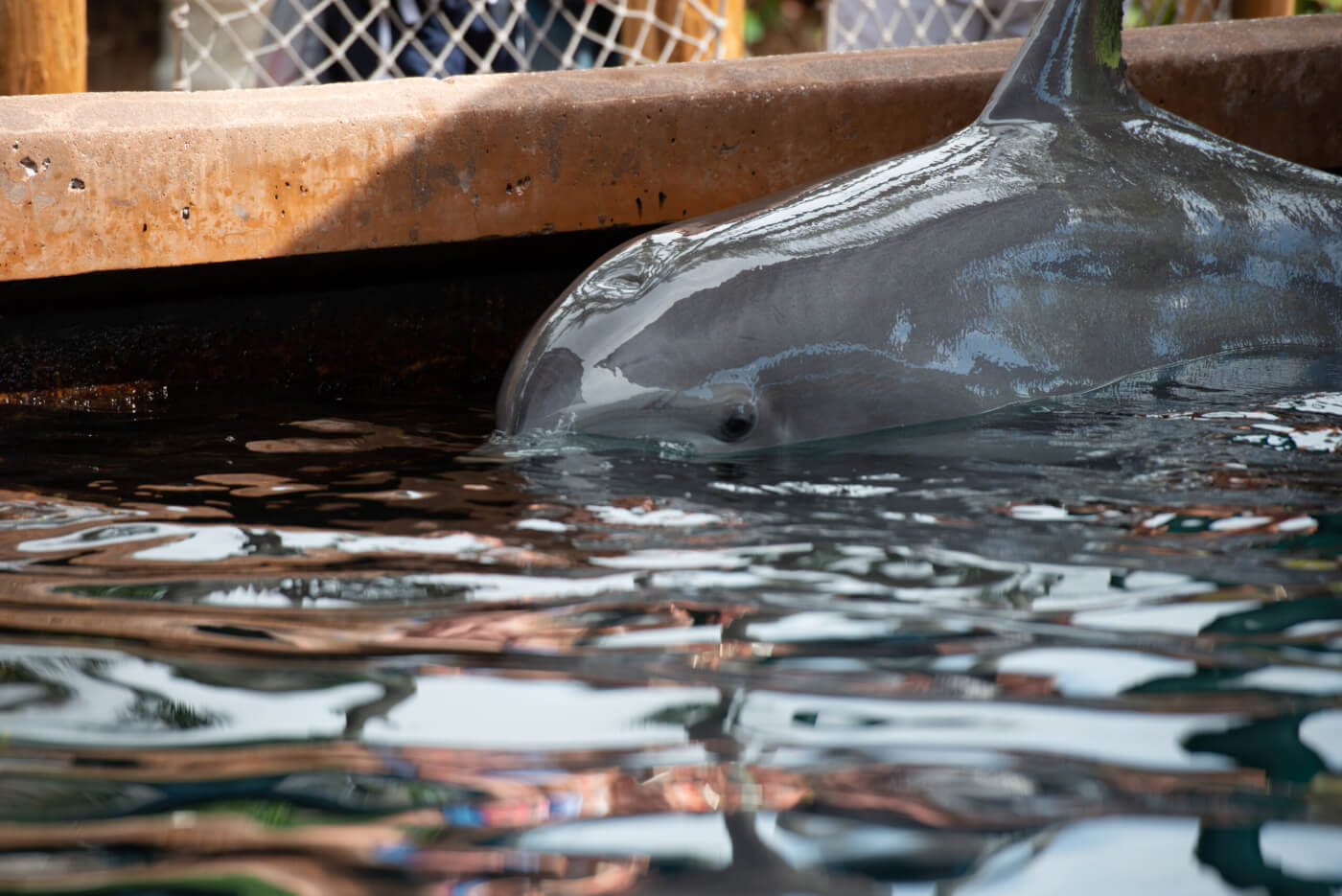
A comprehensive review of dolphin and whale captivity confirms what we’ve long known: Keeping these intelligent, social, complex animals in tiny tanks is inherently cruel. Despite decades of industry promises and self-described “improvements,” the study found that marine parks still fail to meet even the most basic physical and psychological needs of cetaceans. From restricted space to chronic stress, the evidence is clear: Life in a concrete pool can never compare to life in the ocean.
Hundreds of dolphins have died at marine parks, many prematurely, and from various causes, ranging from bacterial pneumonia to sepsis and intestinal torsions. One dolphin at Dolphin Quest Hawaii died the same day he was born from severe aspiration pneumonia and maternal rejection, while a dolphin named Jag died from drowning at the Institute for Marine Mammal Studies (IMMS) & Ocean Adventures.
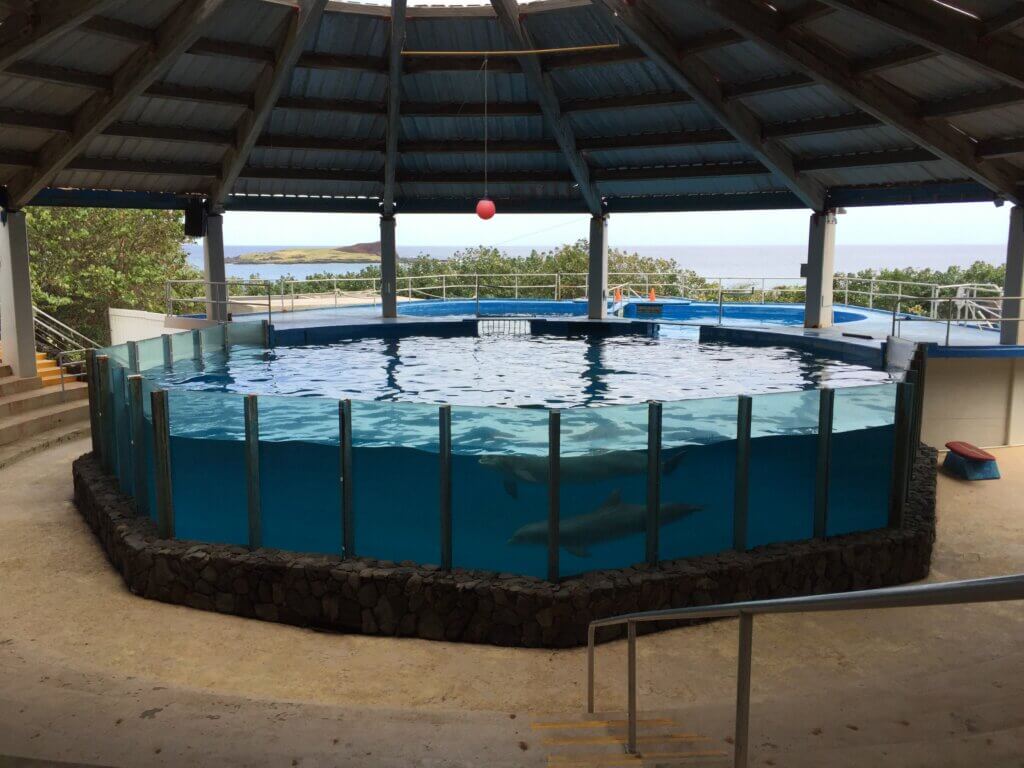
Dolphins Drugged and Forced to Reproduce
Thanks in part to PETA’s tireless efforts to expose the cruelty of breeding orcas for marine park shows, SeaWorld ended its orca-breeding program in 2016, following public backlash, falling stock prices, and mounting legislative pressure. But SeaWorld—along with other cruel parks like Dolphin Research Center and Theater of the Sea—continues to breed dolphins, creating more animals to suffer in tiny tanks for human entertainment.
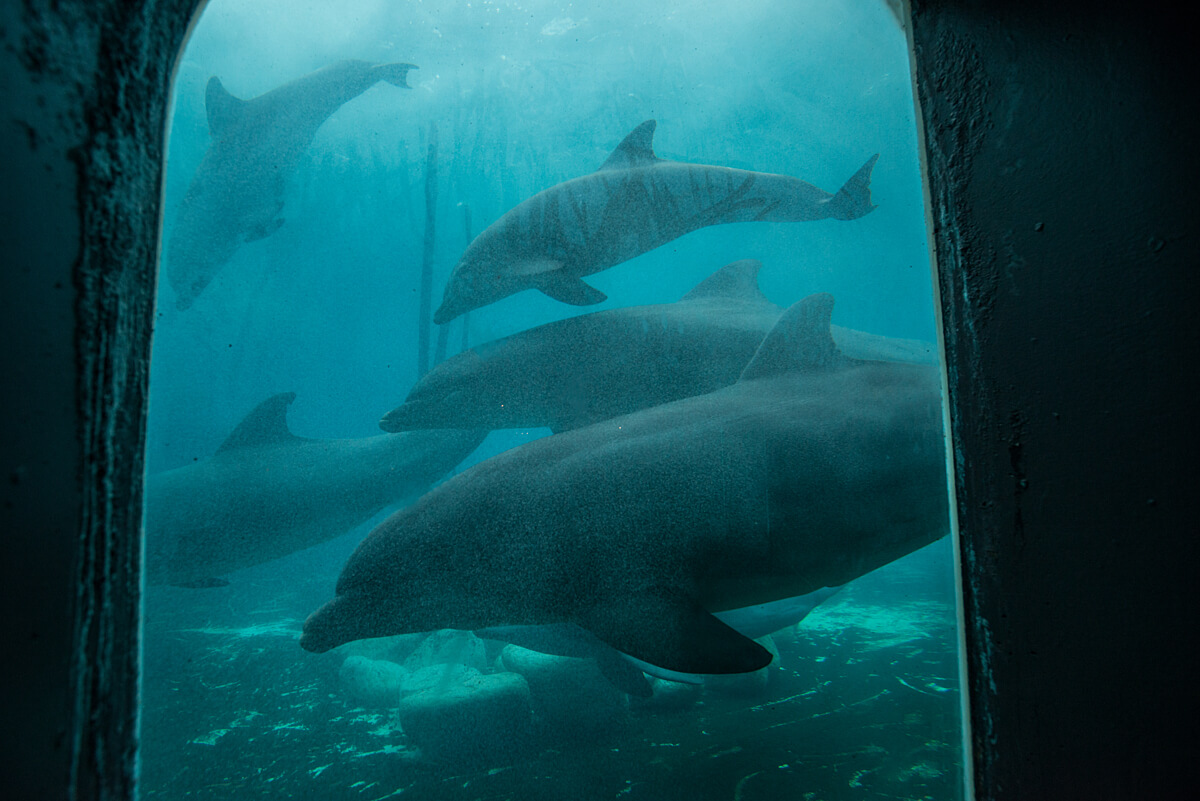 © Jo-Anne McArthur / We Animals Media
When given the chance, dolphins form relationships within large social groups and choose their own mates. In marine parks like SeaWorld and its sister park, Discovery Cove, workers forcibly breed dolphins. Male dolphins are masturbated by hand for their semen, and females are restrained and sometimes drugged so they can’t fight back while a staff member shoves a tube filled with semen into their uteruses.
Can you imagine how confused and scared the animals must feel when they’re subjected to forcible insemination?
Everything about these traumatizing procedures goes against the natural breeding habits of whales and dolphins. No reputable facilities would breed more dolphins into a lifetime of suffering in tiny tanks.
‘Swim with Dolphins’ Activities Are Dangerous for Everyone Involved
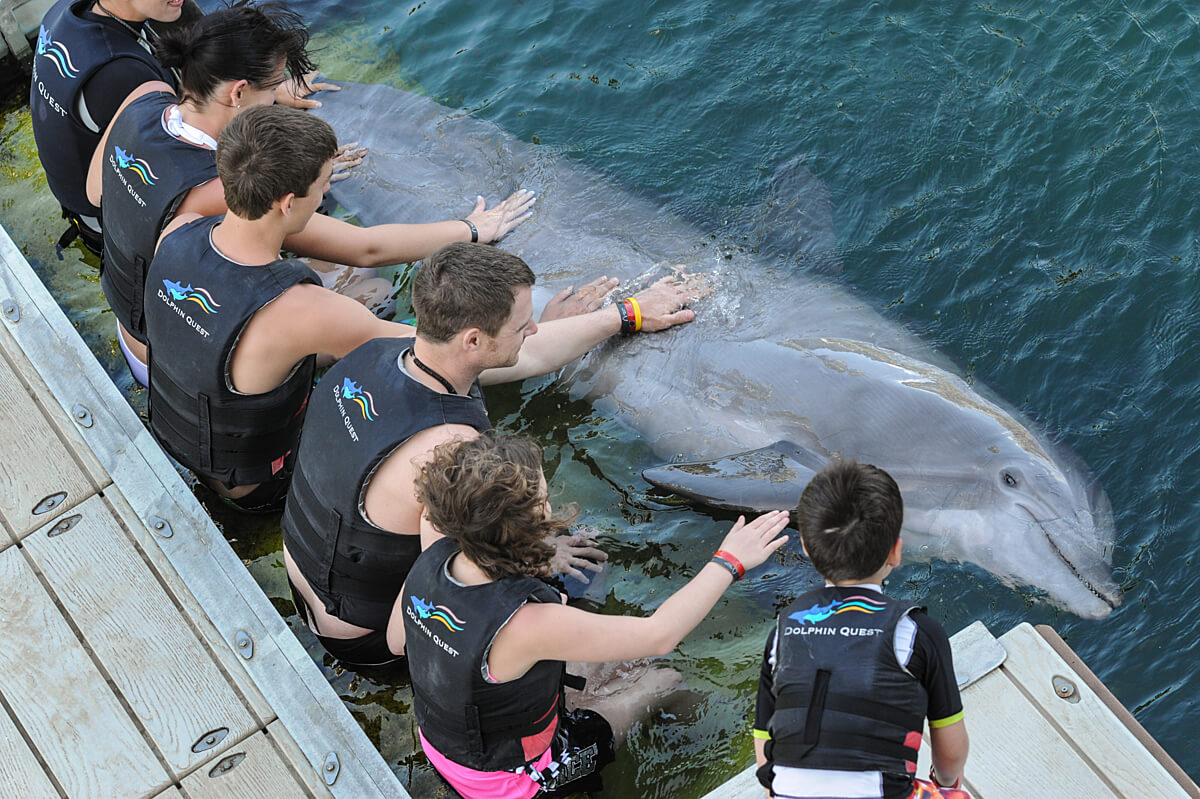
Swimming with dolphins isn’t safe, educational, or ethical, and no credible facility would ever allow these interactions. Marine parks, resorts, and decrepit aquariums that offer swim-with-dolphins programs or allow visitors to touch, hug, or ride dolphins are putting both dolphins and humans in potentially dangerous situations.
Because dolphins do not choose to participate in these encounters and would never naturally allow humans to ride them, some dolphins have bitten people during interactions. Many illnesses, including viral, fungal, and bacterial infections such as Salmonella, can also be passed from dolphins to human visitors.
Change Is Happening for Dolphins—But They Need Your Help!
Momentum for dolphins and other cetaceans is building worldwide: Canada and France have banned cetacean captivity; Mexico passed a bill that bans dolphin breeding, performances, and confinement in concrete tanks; and the Miami Seaquarium closed after more than 50 years.
But hundreds of dolphins are imprisoned across the country at the following marine parks and shoddy aquariums.
Clearwater Marine Aquarium in Clearwater, FL
Discovery Cove in Orlando, FL
Dolphin Life in Key Largo, FL
Dolphin Research Center in Grassy Key, FL
Dolphin Quest Hawaii in Waikoloa Village, HI
Dolphin Quest Oahu in Honolulu, HI
Dolphins Plus Bayside in Key Largo, FL
Gulfarium in Fort Walton Beach, FL
Institute For Marine Mammal Studies/Ocean Adventures in Gulfport, MS
Island Dolphin Care in Key Largo, FL
Mississippi Aquarium in Gulfport, Mississippi
Sea Life Park in Waimanalo, HI
SeaWorld Orlando in Orlando, FL
SeaWorld San Antonio in San Antonio, TX
SeaWorld San Diego in San Diego, CA
Six Flags Discovery Kingdom in Vallejo, CA
Theater of the Sea in Islamorada, FL
It’s time to empty the tanks and send the dolphins to sanctuaries in their ocean homes. Please, never visit a marine park or any other facility that exploits dolphins for entertainment.
No dolphin is suited to life in a marine park tank—period. True progress means moving away from these abusement parks altogether and transitioning these animals to seaside sanctuaries, where they can live in more natural, spacious, and stimulating environments. True sanctuaries offer cetaceans the chance to feel ocean currents and live out their lives with dignity. The animals can still receive human care while being free from exploitation.
The tide is turning to the right side of history! Dolphins once confined in Indonesia have been rehabilitated and released into nature. Belugas have been relocated from a marine park in China to a sanctuary in Iceland. The Whale Sanctuary Project is creating a sanctuary for orcas and belugas in Nova Scotia, and the San Paolo Dolphin Refuge will open soon in Taranto, Italy.
Public opinion is changing, too: A comprehensive survey commissioned by PETA, conducted by The Harris Poll among 2,001 adults across the United States, shows just how strong attitudes are: 92% of Americans believe dolphins belong in the ocean rather than in tanks, and 80% support releasing captive dolphins from marine parks and resorts when possible, or sending them to seaside sanctuaries. It’s time for these facilities to listen and start doing right by dolphins.
After you take action below, visit our action center for even more ways to speak up for these dolphins.