Feds Must Not Give Johns Hopkins University Another Cent for Deadly Owl Experiments
It’s a barren, fluorescent-lit cinderblock torture chamber.
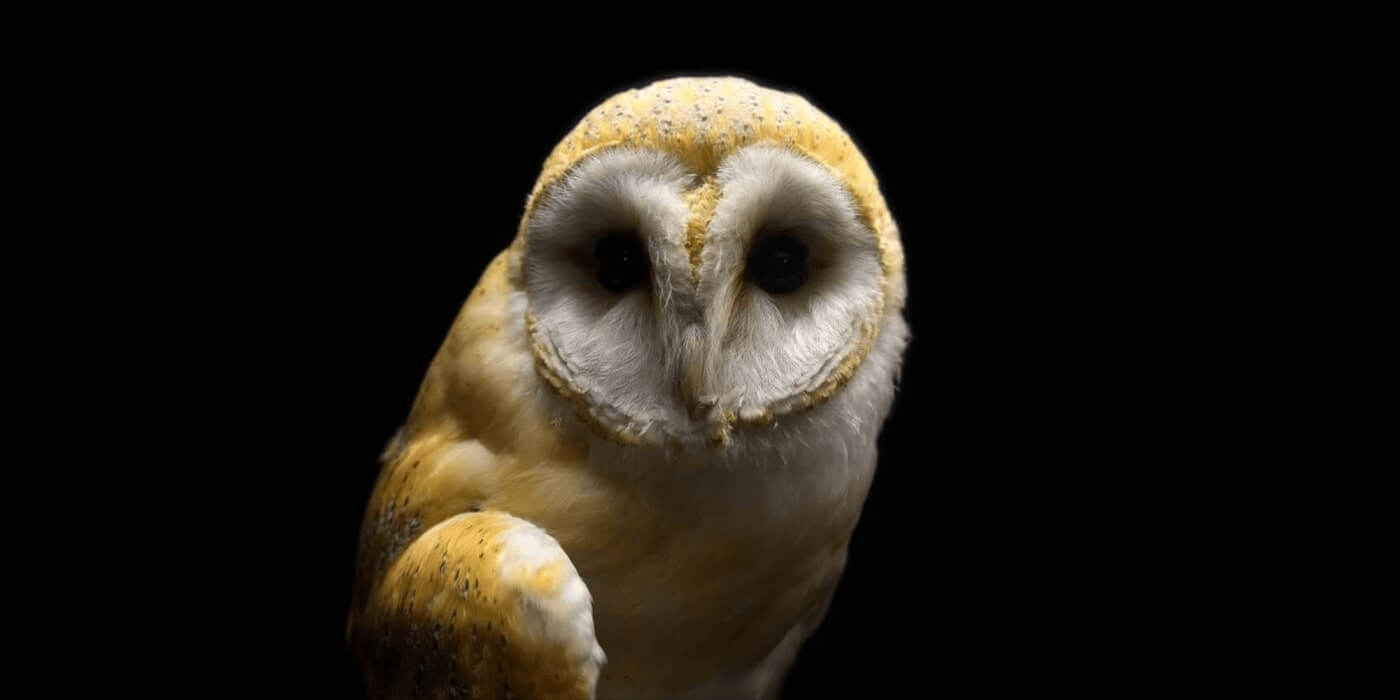
PETA obtained documents revealing that Johns Hopkins experimenter Shreesh Mysore has for years cut into the skulls of barn owls, inserted electrodes into their brains, forced them to look at screens for hours a day, and bombarded them with noises and lights—and pretended that doing this will tell us something about attention-deficit disorder in humans.
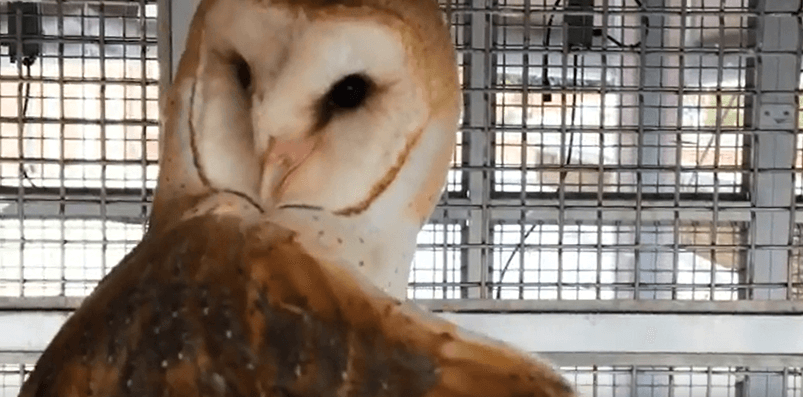
Funded by Johns Hopkins University and taxpayer money through the National Institutes of Health to the tune of more than $3.7 million, Mysore intended to use 50 to 60 barn owls in his recent set of painful experiments, including six birds simply for surgical practice for his staff.
What Shreesh Mysore Did to Owls
Mysore cut into owls’ skulls to expose their brains. Then, he screwed and glued metal devices onto their heads. The owls endured two to three invasive surgeries before Mysore used them in experiments. These birds—who are nocturnal hunters who would fly great distances in their natural habitat—were forced into plastic tubes or restraint jackets so cramped that they couldn’t move their wings while Mysore bombarded them with sounds and lights and measured their brain activity. For some experiments, he restrained fully conscious owls for many hours.
During these experiments, he poked electrodes around in the brains of the fully conscious birds, mutilating their brain tissue so severely that they became “unusable” to him—at which point he killed them.
Mysore admitted that experimenting on owls whose heads are surgically fixed in place could “change the way the brain is solving problems, and we might misinterpret what’s happening or misunderstand if we do this in head-fixed animals.” Yet in his experiments, he did exactly this—attaching bolts to owls’ skulls in order to hold their heads in a fixed position.
All the owls are killed at the end of the experiments.
Torturing Owls Does Nothing for Humans
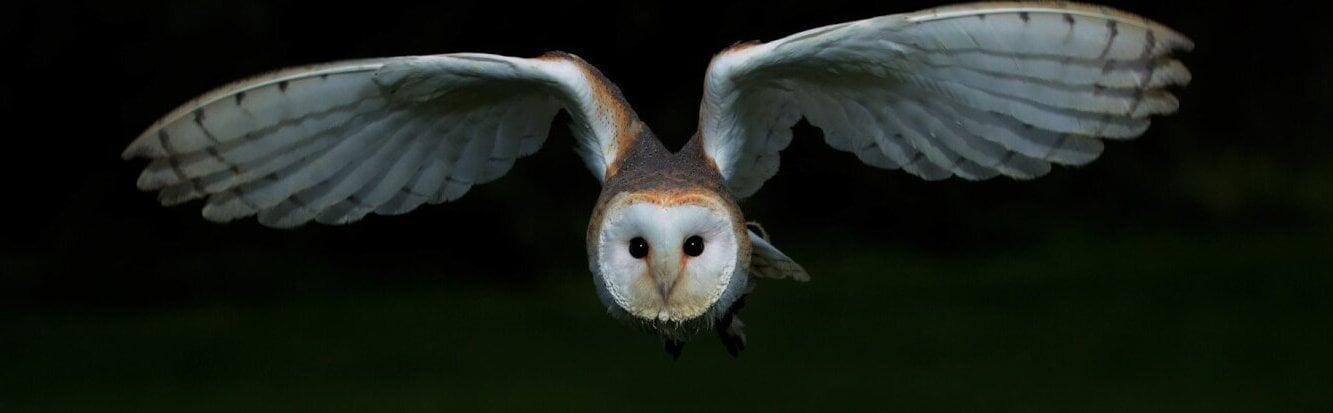
“The evolved differences between owls and humans mean that Shreesh Mysore’s owl findings are highly unlikely to have any relevance to humans. Mysore attempts to promote a view that all animals are basically similar, referring on the Johns Hopkins website to ‘the brain,’ as if all species share a similar brain. Yet every lineage has undergone its own independent history of adaptation and specialization. Refusal to acknowledge species differences violates basic biological concepts.”
—Dr. Pandora Pound, independent research scientist
Mysore claimed that his experiments could help humans, but, unlike us, owls have well-developed auditory and visual systems that are specialized for target selection. Bombarding these animals with artificial stimulation while their brain activity is measured in a distressing and completely unnatural situation does nothing to further our understanding of human attention-deficit disorder (ADD). Scientists who’ve gotten the memo that we’re in the 21st century are studying humans with ADD through sophisticated neuroimaging techniques—including functional MRI, positron emission tomography (PET), transcranial magnetic stimulation (TMS), and electroencephalography (EEG). Data from these non-animal research methods have paved the way for current ADD treatments.
Help End Barn Owl Torment
Federal funding for Shreesh Mysore’s cruel experiments reportedly ran out on May 31, 2026. Please take action TODAY by urging federal officials to deny any new funding request for cruel and pointless experiments on owls.
After you take action, you’ll see an easy way to share this information. Please ask five friends or relatives to support this campaign!