Save Monkeys, Stop Traffickers: Support the PRIMATE Act Today!
The business of importing monkeys for use in experiments is big. It’s big on suffering, corruption, fraud, and disease risk. It’s pushing a monkey species to the brink of extinction while also posing an unaddressed but dangerous public health threat.
With your help, we can end it.

The PRIMATE Act
U.S. Reps. Greg Steube (R-Fla.-17) and Dina Titus (D-Nev.-01) have introduced the Preventing Risky Importation of Monkeys to Avoid Toxic Exposures (PRIMATE) Act. This important, common-sense legislation would ban the import of monkeys used for experiments. It aligns with PETA’s years-long efforts to end the suffering of monkeys, help protect endangered species, and safeguard the health of Americans who are unknowingly at risk of the spread of dangerous diseases.
Nicole Malliotakis (R-N.Y.-11)
André Carson (D-Ind.-7)
Zoe Lofgren (D-Calif.-18)
Susie Lee (D-Nev.-3)
Raja Krishnamoorthi (D-Ill.-8)
Debbie Wasserman Schultz (D-Fla.-25)
Brendan F. Boyle (D-Pa.-2)
Jared Moskowitz (D-Fla.-23)
Gus M. Billrakis (R-Fla.-12)
Nancy Mace (R-S.C.-1)
Aaron Bean [R-Fla.-4]
Rep. Brian Fitzpatrick (R-PA-1)
Why Is This So Important?
Passage of the PRIMATE Act would represent a tectonic shift toward compassion and away from worldwide cruelty and corruption. It would end the incentive driven by U.S. demand for traffickers to turn a fast buck abducting monkeys from forests, help endangered long-tailed macaque populations recover, dry up the profit motive for shady monkey breeders, reduce the risk of dangerous diseases entering the country through the primate trade, and drive investment toward superior, non-animal research methods that have a much greater chance of helping human patients in need.
One bill, numerous benefits.
End Suffering and Death
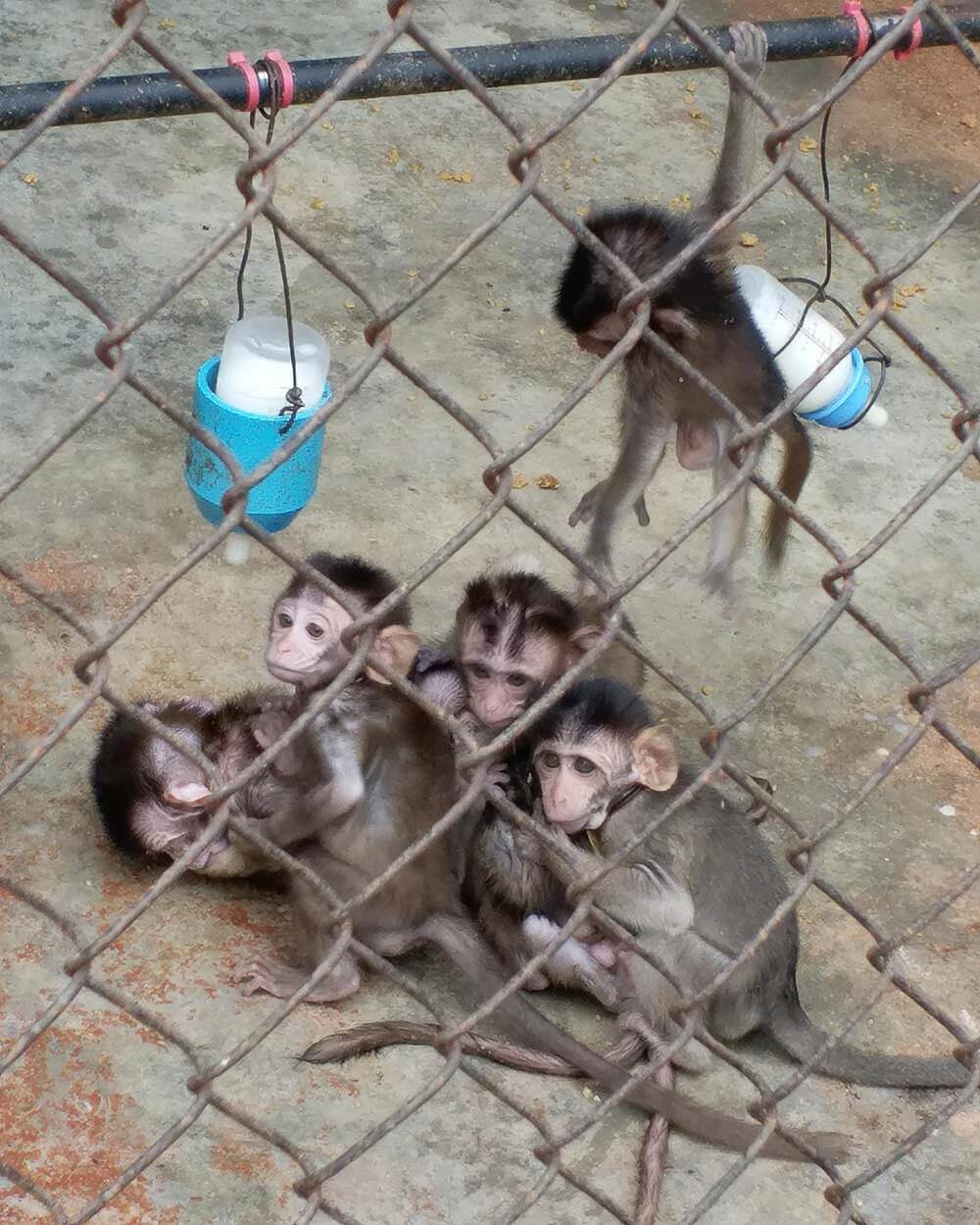
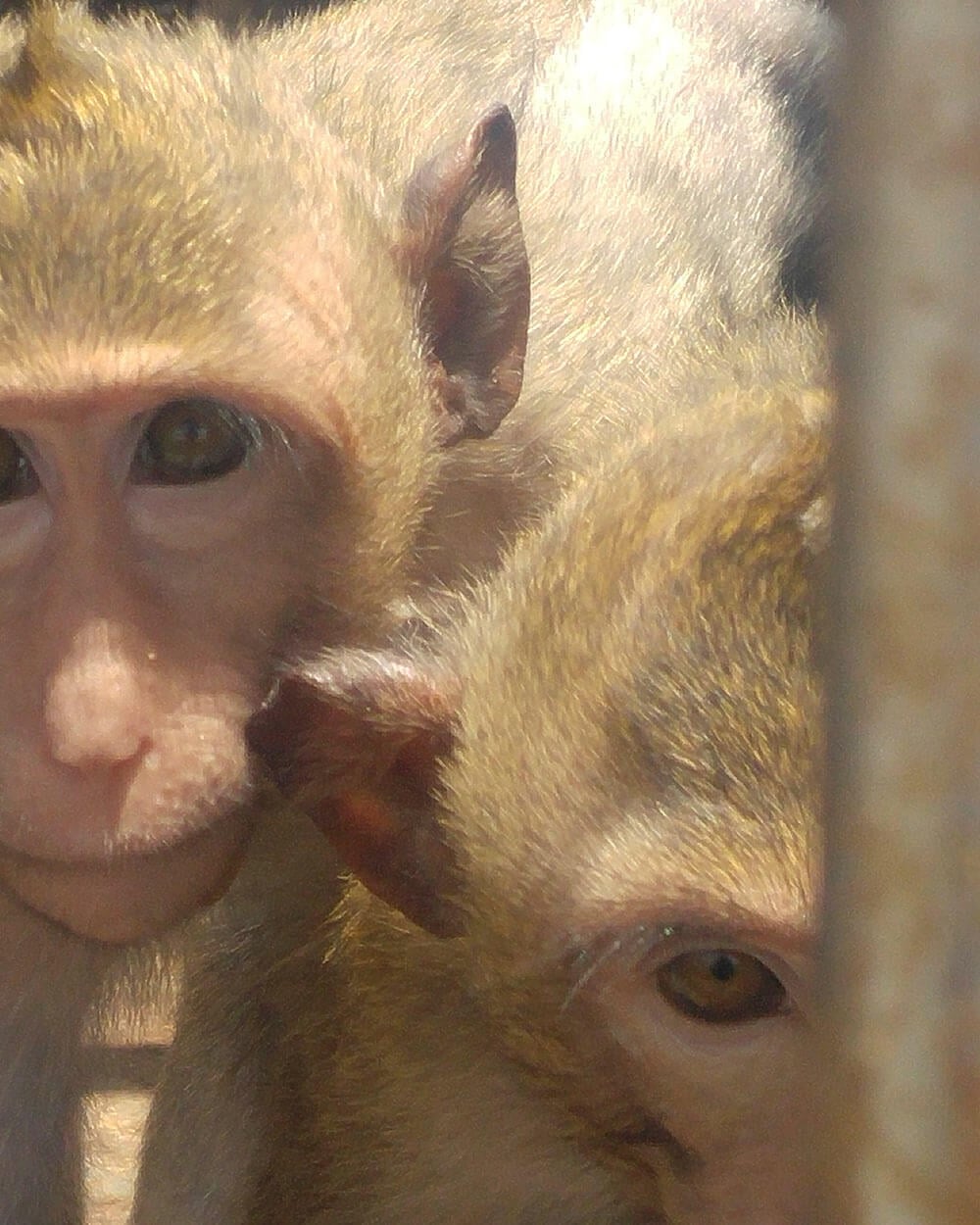
Monkeys suffer at every step along the importation pipeline. Some are illegally ripped from forests on the other side of the world, crammed into bags, and sent to fetid monkey farms. They’re shoved into tiny crates and stacked into the cargo holds of airplanes, where falsified paperwork books their passage to the U.S.
Reduce Laboratory Torment
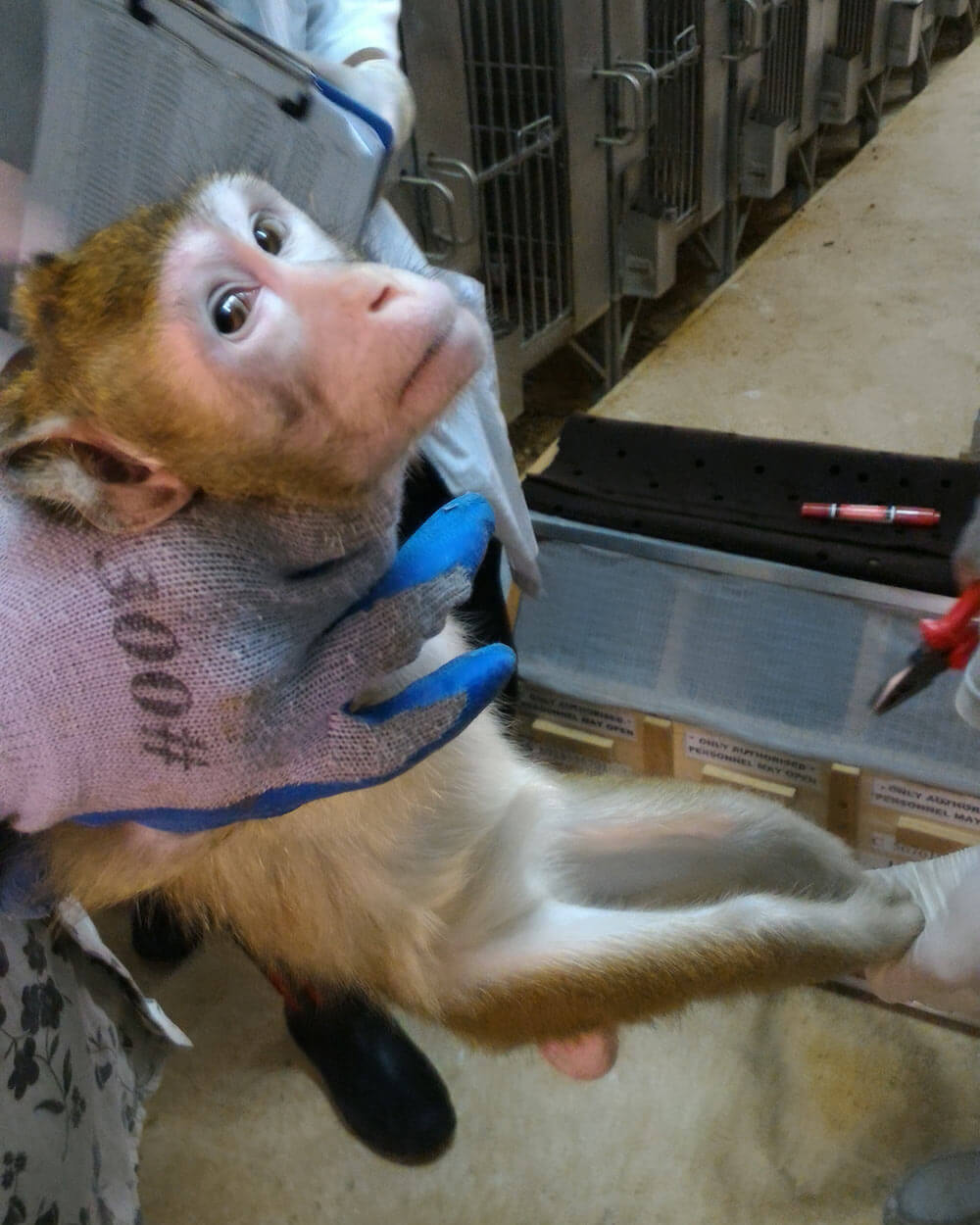
If the protracted journey of thousands of miles doesn’t kill them, laboratories then confine monkeys to small, barren cages and subject them to painful and invasive procedures, including repeated surgeries, force‑feeding of drugs or chemicals, and deliberate infection with diseases. These conditions cause both physical pain and severe psychological distress.
The U.S. imported nearly 285,000 monkeys between 2015 and 2025. Nearly all went to laboratories. They don’t make it out alive.
Reverse the Road to Extinction
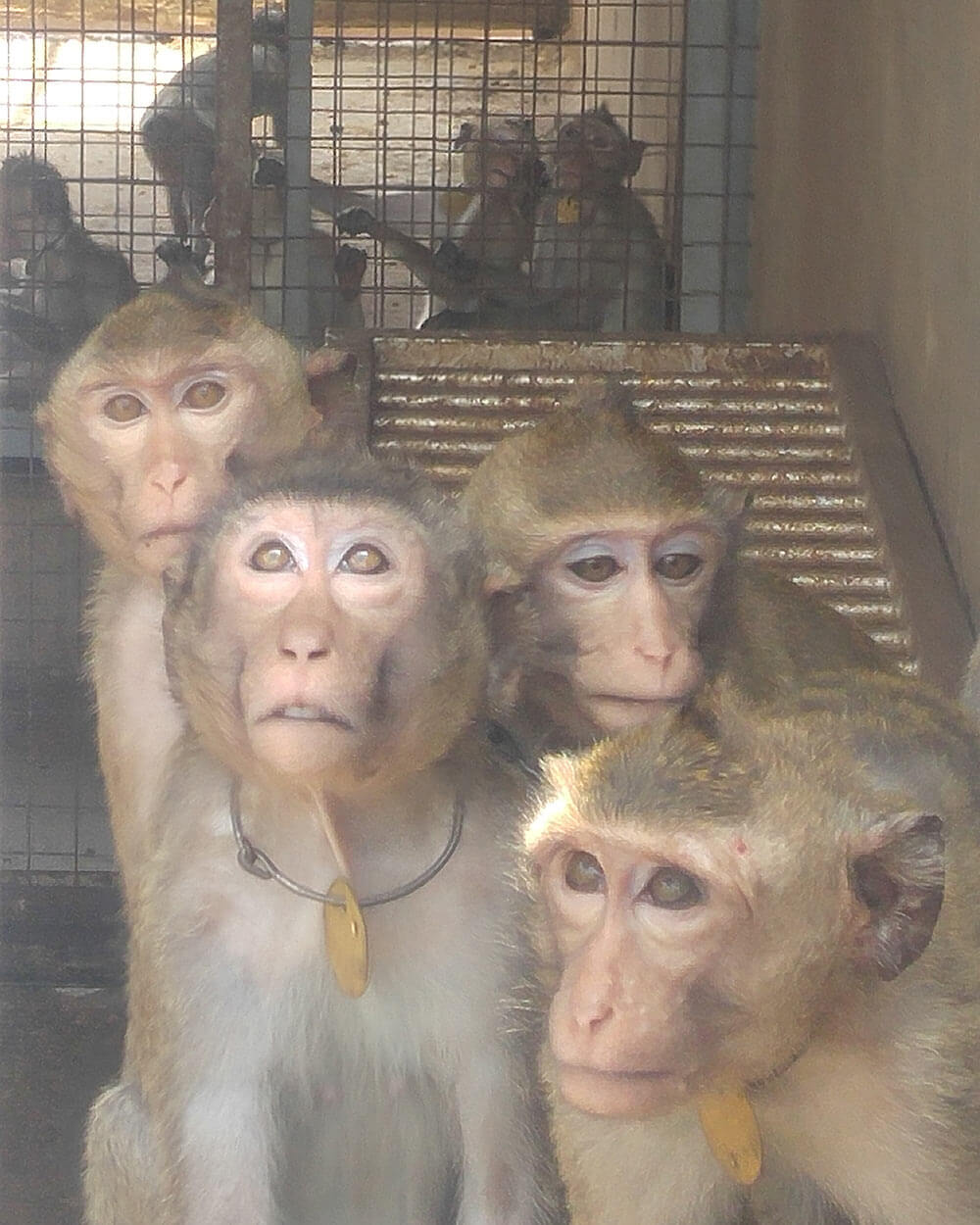
Most monkeys imported for laboratories are long-tailed macaques, a species classified as endangered by the International Union for Conservation of Nature, the world’s most comprehensive source of information on the global conservation status of animals. The organization has said their numbers over the next three generations will decline by 50 percent—half!—if trends continue.

Stop Corruption
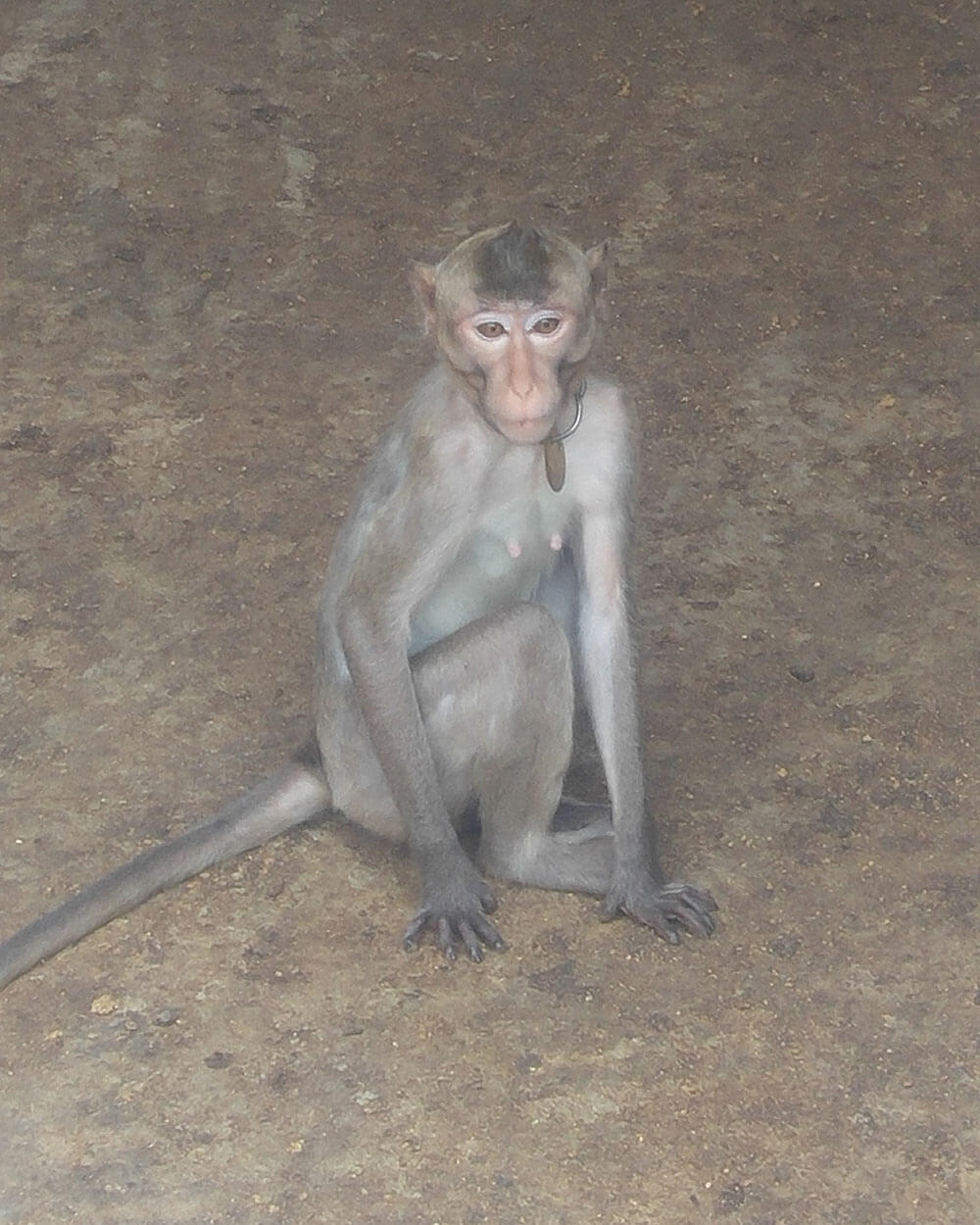
The monkey importation pipeline is rife with fraud. A five-year U.S. Fish and Wildlife Service investigation that ended in 2022 alleged that a single Cambodian monkey farm sent more than 30,000 monkeys who were smuggled from the wild to companies in the U.S. Smuggling attempts across the Thai-Cambodian border continue.
End Disease Risk
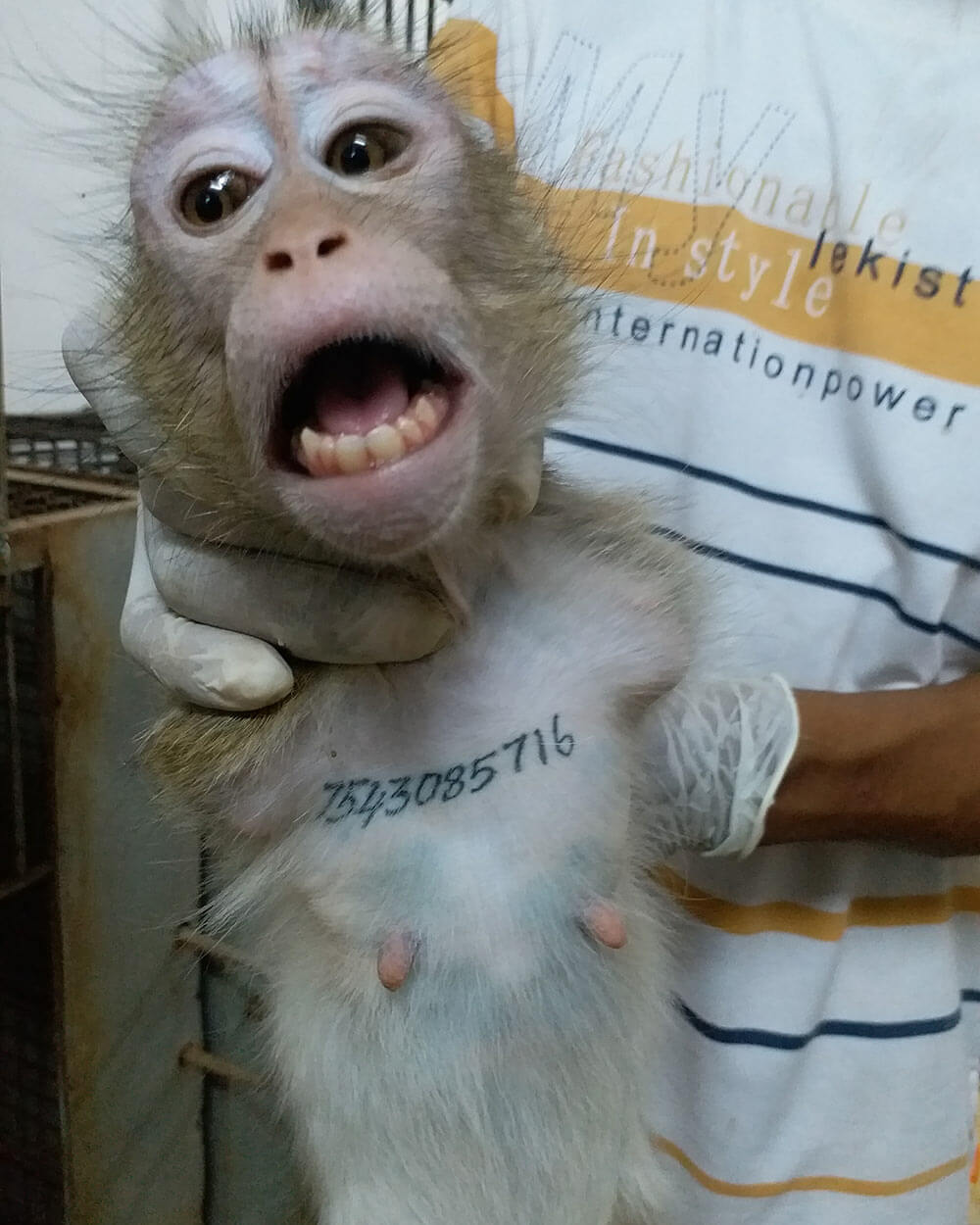
Imported monkeys have arrived in the U.S. carrying tuberculosis, drug-resistant Shigella, malaria parasites, antibiotic-resistant bacteria, and other pathogens capable of infecting humans and other animals. These pathogens aren’t confined to the laboratories. Because they’re shed in feces, urine, blood, and saliva, dangerous infectious diseases can easily spread through workers, wildlife, insects, and the environment.
Encourage Non-Animal Science
The National Institutes of Health acknowledges that about 95% of drugs that appear safe and effective in tests on animals fail in humans. Monkeys are not miniature humans, so tormenting and killing them in experiments is pointless. Superior, non-animal methods are readily available but starve for funding, while money instead flows to the animal-killing industry.
The FDA Modernization Act 2.0 clarified that non-animal methods may replace animal testing in drug development. Senators Rand Paul (R-KY) and Cory Booker (D-N.J.) later introduced the FDA Modernization Act 3.0 to align FDA regulations with current federal law and state-of-the-art testing methods.
PETA's Actions
PETA has led the charge to end the importation of monkeys. We’ve hosted congressional briefings, exposed hidden tuberculosis risks in imported monkeys, and documented systemic biosecurity failures. We showed whistleblower footage of the illegal monkey trade in Cambodia, and our Chief Science Advisor for Primate Experimentation, Dr. Lisa Jones-Engel, and PETA honorary board member Edie Falco shared a rare look inside the trade with several members of Congress, and discussed its serious disease risks, among other actions.
Growing Support
PETA is not alone in supporting this legislation. International, national, state, and local groups are also throwing their weight behind this common-sense bill.
Abolición Vivisección
Action for Primates
All Life Institute
Animal Wellness Action
Animal Wellness Foundation
Center for Great Apes
Christian Animal Rights
Direct Action Everywhere
Ecoflix
EMS Foundation
Fundacion Entropika
International Primate Protection League
InVitro International
Israeli Primate Sanctuary Foundation
Lady Freethinker
LGBTQIA+ Cancer Network
Macaque Coalition, Asia for Animals
Neotropical Primate Conservation
North American Primate Sanctuary Alliance
Physicians Committee for Responsible Medicine
Species Unite
The Center for a Humane Economy
The Talkin’ Monkeys Project
The Vervet Monkey Foundation
Wildlife Friends Foundation Thailand
Wildlife Watch, Inc.
Animal Protection Voters – New Mexico
Animal Rights Collective Portland
Ballydídean Farm Sanctuary
Chimpanzee Sanctuary Northwest
Dane 4 Dogs
Humane Action Pennsylvania
Humane Long Island
Humane Society of Huron Valley
Humane Society of New York
Northwest Animal Rights Network
Primates Incorporated
Turpentine Creek Wildlife Refuge
Utah Animal Rights Coalition
Dr. Mark Jones BVSc MSc(Stir) MSc(UL) MRCVS, veterinarian

What You Can Do
Monkeys belong in forests, not laboratories. Please use the form below to urge your U.S. representative to cosponsor this important, common-sense legislation today!
After you take action, you’ll see an easy way to share this information. Please ask five friends or relatives to support this campaign!”